Liposomal Vitamin C Explained: What Is Liposome Technology and How It Improves Absorption
In recent years, liposomal vitamin C has become one of the fastest-growing categories in the dietary supplement industry. Instead of focusing only on higher doses, many consumers are now interested in how efficiently nutrients are absorbed by the body.
This shift has brought attention to liposome technology, a delivery system designed to improve the bioavailability of vitamins and nutrients.
In this article, we will explain:
What liposomes are
How liposomal vitamin C works
Why liposome technology is used in supplements
Whether liposomal vitamin C is necessary for everyone
Understanding the science behind liposomal vitamin C can help consumers make more informed choices when selecting supplements.
What Is a Liposome?
A liposome is a microscopic spherical structure made from phospholipids, which are fat molecules that naturally form biological membranes.
Liposomes consist of a lipid bilayer, a structure that closely resembles the cell membrane found in the human body.

Phospholipids contain two different parts:
Hydrophilic head – attracts water
Hydrophobic tail – repels water
When phospholipids are placed in water, they naturally arrange themselves into spherical structures with an outer membrane.
This configuration allows liposomes to carry different substances:
Water-soluble compounds inside the vesicle
Fat-soluble compounds within the lipid membrane
Because of this unique structure, liposomes have become an important technology in drug delivery systems (DDS) used in modern medicine and nutritional science.
The Discovery of Liposomes
Liposomes were first discovered in the 1960s by British biophysicist Alec Bangham while studying phospholipids in water.
During his experiments, he observed that phospholipids naturally formed microscopic membrane-like spheres.
Later, immunologist Gerald Weissmann introduced the term “liposome,” which literally means “fat body.”
Since then, liposomes have been widely studied for applications such as:
Targeted drug delivery
Vaccine development
Nutrient transport systems
Today, liposome technology continues to play an important role in biomedical research and pharmaceutical innovation.
Why Liposome Technology Is Used for Vitamin C
Vitamin C (ascorbic acid) is one of the most widely consumed vitamins due to its role as an antioxidant and its involvement in immune function.
However, vitamin C has several characteristics that affect how it behaves in the body:
Absorption decreases when very large doses are consumed
Excess vitamin C is usually excreted through urine
High doses may cause digestive discomfort in some individuals
Because of these limitations, researchers have explored ways to improve vitamin C bioavailability.
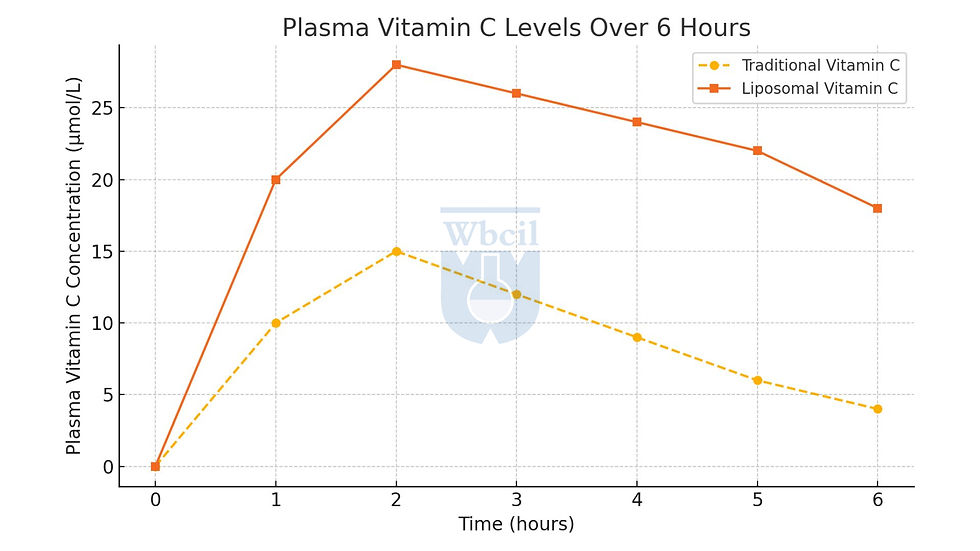
One of these approaches is liposomal vitamin C, in which vitamin C molecules are encapsulated inside liposomes.
This delivery method may offer several potential advantages:
Protection of vitamin C during digestion
Improved absorption in the intestines
Longer circulation time in the bloodstream
Some clinical studies suggest that liposomal vitamin C may show higher bioavailability than standard vitamin C supplements, although results can vary depending on the formulation and study design.
How Liposomal Vitamin C Works in the Body
Liposomes resemble the structure of human cell membranes, which allows them to interact with the body in several ways.
Possible mechanisms include:
1. Intestinal Absorption
Some liposomes may be absorbed through the intestinal lining while maintaining their vesicle structure.
2. Nutrient Release During Digestion
In some cases, liposomes may break down during digestion, releasing vitamin C that is then absorbed through standard pathways.
3. Cellular Uptake
Liposomes that remain intact may interact directly with cells by:
Fusing with cell membranes
Entering cells through endocytosis
This mechanism may help deliver nutrients more efficiently to cells.
Because of these properties, liposome technology is being widely studied for both pharmaceutical and nutritional applications.
The Growing Market for Liposomal Vitamin C
The global supplement market has changed significantly in recent years.
Consumers are increasingly paying attention not only to dosage but also to:
Absorption efficiency
Ingredient quality
Delivery technology
This shift has created two major categories in the vitamin C market.
Value-Focused Vitamin C Brands
Some brands focus on affordability and high-dose vitamin C products.
Examples include:
Nature Made
Kirkland Signature
Nutricost
Premium Supplement Brands
Other brands emphasize ingredient purity, formulation quality, and advanced delivery systems.
Examples include:
MaryRuth's
Pure Encapsulations
Liposomal Vitamin C Specialists
Some companies specifically focus on liposomal delivery technology.
Examples include:
LivOn Labs
Quicksilver Scientific
These market trends reflect a broader shift toward quality-focused supplement choices.
Is Liposomal Vitamin C Better for Everyone?
Although liposomal vitamin C has gained popularity, it may not be necessary for everyone.
For most healthy individuals, standard vitamin C from food or regular supplements is sufficient to meet daily nutritional needs.
However, liposomal vitamin C may be considered in certain situations, including:
Individuals who experience digestive discomfort from high doses of vitamin C
People considering higher vitamin C intake
Those interested in maximizing nutrient absorption
Ultimately, the most appropriate supplement depends on individual health needs, diet, and personal preferences.
FAQ About Liposomal Vitamin C
What is liposomal vitamin C?
Liposomal vitamin C is a form of vitamin C encapsulated in liposomes—tiny lipid-based vesicles designed to improve nutrient delivery and absorption.
Does liposomal vitamin C absorb better?
Some studies suggest that liposomal vitamin C may have higher bioavailability than regular vitamin C, although results vary depending on formulation and dosage.
Is liposomal vitamin C worth it?
For many people, standard vitamin C supplements are sufficient. Liposomal vitamin C may be beneficial for individuals seeking improved absorption or higher doses.
Are liposomal supplements safe?
Most liposomal supplements are generally considered safe when used according to recommended dosages, but individuals should consult healthcare professionals before starting new supplements.
Conclusion
Liposomes are microscopic vesicles composed of phospholipid bilayers, structures that closely resemble human cell membranes.
Because of this similarity, liposome technology has been developed as a method to enhance the delivery of nutrients and medications in the body.
When applied to vitamin C supplements, liposomal vitamin C aims to improve bioavailability and protect nutrients during digestion.
As the supplement market evolves, consumers are increasingly considering not only vitamin dosage but also:
Nutrient absorption
Delivery technology
Ingredient quality
These factors highlight a broader shift in the health industry—from simply consuming larger quantities of nutrients to focusing on how effectively the body can use them.


